“Mature atomic and solid-state platforms are now ready for operational demonstrations across multiple DoW domains,” the U.S. Defense Innovation Unit (DIU) wrote in a June 2026 solicitation for quantum sensors and clocks. DoW stands for the Department of War, which DIU belongs to. In a June 23 announcement, the department said DIU is “expected to invest up to $200M within the next year” in the effort.
An operational demonstration is a field trial, the stage most quantum sensors have reached. As of November 2026, the quantum sensors in routine use include microwave atomic clocks, cesium-vapor magnetometers, which the U.S. Environmental Protection Agency names as the usual instrument for magnetic surveys in environmental investigations, and, by their maker’s count, fixed-site gravimeters. Navigation units and wearable brain scanners are still in trials against the classical instruments they would replace. Companies sell the newer diamond and wearable atomic magnetometers mainly as research instruments. Atom-based radio receivers and imaging with correlated photons are at an earlier stage still.
The published record of those trials consists mostly of company preprints, press releases without accuracy figures, and clinical studies of a few patients. American, British, and NATO programs have scheduled independent tests from 2026 to 2028, designed to show whether a quantum sensor beats its classical rival on a moving vehicle.
The Quantum Economic Development Consortium put the quantum sensing market at $470 million in 2025, about a third of its figure for quantum computing, as Quantum Observer reported.
How quantum sensors work
A quantum sensor measures time, fields, or motion through their effect on atoms, electrons, or photons prepared in known quantum states. An atomic clock locks a microwave or laser oscillator to the frequency of a transition between two energy levels of an atom. A quantum magnetometer reads how a magnetic field shifts the spin states of atoms in a heated glass cell, or of defects in a diamond crystal.
An atom interferometer splits a cloud of laser-cooled atoms into two paths and then recombines them. Physicists read the acceleration and rotation the atoms experienced in between from the interference of the two paths.
DIU wrote in its solicitation that quantum sensors and clocks “are not beholden to the same fundamental limitations of classical systems.” Jonathan Hoffman, then program manager for the Robust Quantum Sensors (RoQS) program at the Defense Advanced Research Projects Agency (DARPA), said in February 2025 that “their fragility has been a major barrier to deployment.” DARPA named vibration and electromagnetic interference among the disturbances that degrade the sensors, especially on moving platforms.
Quantum Observer sorts the sensor families below into three stages. A fielded sensor is sold and used routinely outside a laboratory. A sensor in field trials has been tested in vehicles, at sea, or in clinics, with a classical instrument as the benchmark. A laboratory sensor has been demonstrated only under laboratory conditions.
Quantum Observer lists instruments that companies sell mainly to research laboratories as commercial laboratory instruments, a category between the fielded and laboratory stages.
| Sensor family | Stage as of November 2026 | Example |
|---|---|---|
| Microwave atomic clocks | Fielded | Satellite navigation |
| Optical atomic clocks | Field trials | 20 days at sea |
| Cesium-vapor survey magnetometers | Fielded | Environmental site surveys |
| Diamond and wearable atomic magnetometers | Commercial laboratory instruments | Scanning diamond microscope |
| Wearable brain scanners | Clinical studies | Five children with epilepsy |
| Magnetic navigation | Field trials | Airborne preprint |
| Absolute gravimeters | Fielded at fixed sites, by the maker’s count | Volcano monitoring |
| Gravity gradiometers and shipborne gravimeters | Field trials | Tunnel survey |
| Inertial navigation | Field trials | Four-hour flight |
| Rydberg radio receivers | Early field demonstrations | Receiver evaluated at an Army experiment |
| Quantum imaging and radar | Laboratory | Imaging with undetected photons |
Atomic clocks
Each satellite of the Global Positioning System (GPS) contains “multiple atomic clocks that contribute very precise time data to the GPS signals,” according to the U.S. government’s GPS website. The government names wireless networks, power plants, and financial institutions among the users that synchronize their equipment to GPS time.
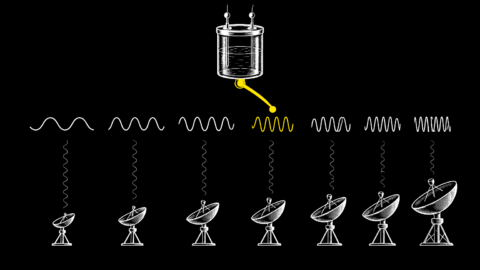
Optical clocks lock a laser to an atomic or molecular transition at a frequency far higher than the microwaves used in GPS clocks. Researchers at Vector Atomic reported in a preprint, later published in Nature, that three iodine optical clocks of 35 liters each ran continuously aboard a naval ship in the Pacific for 20 days. The clocks kept timing errors below 300 picoseconds per day, with what the authors called “comparable performance to active hydrogen masers in one-tenth the volume.” A hydrogen maser is the microwave clock that timing laboratories use for short-term stability.
IonQ, a quantum computing company, agreed in September 2025 to buy Vector Atomic for about 6.3 million IonQ shares, according to a filing with the Securities and Exchange Commission. It completed the all-stock acquisition on October 7, 2025, according to a release it filed with the commission.
Infleqtion has tested its compact Tiqker optical clock in the air, under water, and at sea. Tiqker flew aboard QinetiQ’s RJ100 test aircraft at MoD Boscombe Down in May 2024, in flights backed by UK Research and Innovation. In October 2025, the Royal Navy reported that the clock had operated reliably over multiple dives aboard XV Excalibur, an extra-large uncrewed underwater vessel.
The Royal Navy described Tiqker as “a compact optical clock with performance equivalent to a laboratory-grade time reference.” Neither the Royal Navy nor the UK government published timing data from the two British tests. In a release on October 30, 2026, Infleqtion said Tiqker “operated continuously for over two weeks at sea” aboard the U.S. Navy support vessel RV Merlin, during the Maritime Big Play Pacific exercise. The company gave no stability figures.
The UK’s Defence Science and Technology Laboratory (Dstl) reported in February 2026 on a trial of atomic clocks left to run unattended for long periods. Dstl plans a further trial in 2027 and described deploying quantum navigation systems, including atomic clocks, on an aircraft by 2030 as the UK’s goal. For U.S. forces, DIU asked for portable clocks of no more than 5 liters, 5 kilograms, and 30 watts.
Metrologists are also preparing to redefine the second around optical clocks. At their general conference in October 2026, the member states of the Metre Convention asked the International Committee for Weights and Measures to work toward a proposal for a new definition, to be presented at the next conference in 2030. In the same resolution, they noted that “a consensus has not been reached” on whether to base the definition on one atomic species or several, and that some mandatory criteria were not yet fulfilled. They wrote that those criteria “could realistically be fulfilled by 2030.”
Microwave atomic clocks are fielded, but optical versions are still in sea and air trials against the hydrogen maser.
Magnetometers
An optically pumped magnetometer (OPM) passes laser light through a heated vapor of alkali atoms, such as rubidium, and measures how a magnetic field alters its transmission. Under its Transition of Quantum Sensing program, DIU planned to begin field testing atomic, solid-state, and diamond magnetometers, among other sensors, in 2025.
Wearable brain scanners
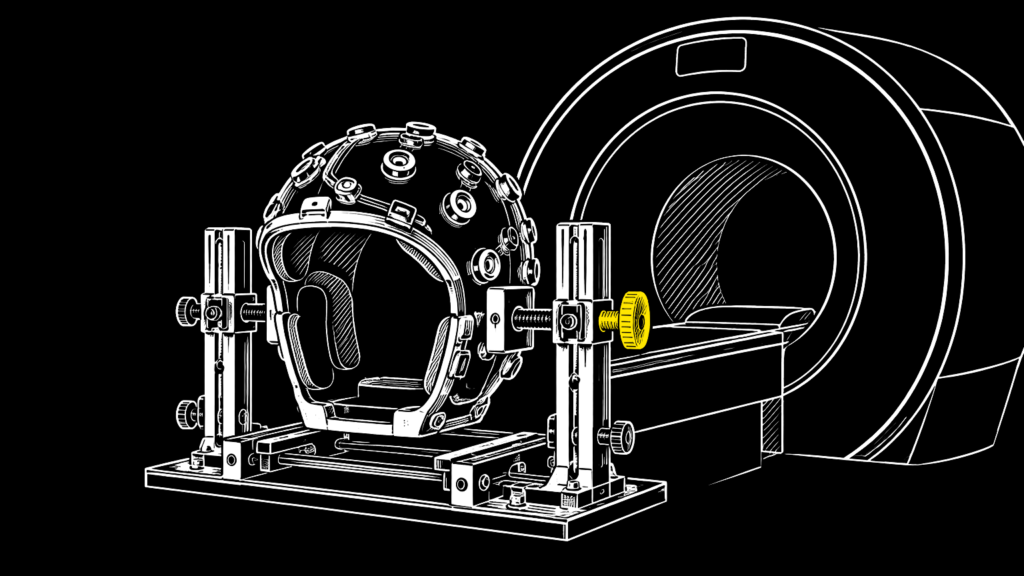
In medicine, OPMs are being tested for magnetoencephalography (MEG), which maps brain activity from the weak magnetic fields that neurons produce. Conventional MEG systems use superconducting sensors cooled to cryogenic temperatures in a fixed helmet. Cerca Magnetics, a Nottingham company that builds OPM systems, puts the number of conventional MEG scanners in operation at about 150 on its website.
In 2018, Elena Boto, Matthew Brookes, and colleagues reported in Nature a scanner built from OPMs that “can be worn like a helmet, allowing free and natural movement during scanning.”
In a 2022 study in Radiology, Odile Feys, Xavier De Tiège, and colleagues compared the two technologies in five school-aged children with focal epilepsy. They used 32 OPMs against a cryogenic system of 102 magnetometers and 204 planar gradiometers. The OPMs recorded epileptic discharges at greater amplitude in all five children and with a better signal-to-noise ratio, the strength of a signal relative to background noise, in four. The two systems located the discharges in similar places.
Young Epilepsy runs a longstanding clinical electroencephalography (EEG) service and installed a research OPM system alongside it. As the sponsor, the organization received a favorable ethics opinion in April 2024 for a three-year study. Its team is comparing OPM-MEG with scalp EEG and checking the findings against the outcomes of epilepsy surgery.
Cerca states on its website that “the Cerca OPM-MEG System is offered as a research system, it does not have any medical or regulatory approvals in any jurisdiction.” FieldLine sells an OPM-MEG system called HEDscan. On its website, the company says the device “can be used in any room of any medical facility” and gives no regulatory status. In a search of the U.S. Food and Drug Administration’s database of 510(k) clearances and of the makers’ websites in November 2026, Quantum Observer found no regulatory clearance for an OPM-MEG system.
On October 13, 2026, the UK government named Cerca among the winners of a £50 million UK Research and Innovation competition for quantum sensing and navigation. Cerca’s award is for a wearable scanner aimed at clinical use before epilepsy surgery. In the quantum missions it published in November 2023, the previous UK government set the goal that “by 2030, every NHS Trust will benefit from quantum sensing-enabled solutions.”
Diamond sensors
Nitrogen-vacancy (NV) centers are defects in diamond made of a nitrogen atom beside a missing carbon atom. Their electron spins respond to magnetic fields at room temperature. Oak Ridge National Laboratory operates a Qnami ProteusQ scanning NV microscope and calls it “a complete quantum microscope system.” Qnami lists the instrument on its product page with a sales contact.
The laboratory gives the microscope’s lateral resolution as about 40 nanometers and its nominal sensitivity as 3 microtesla per root hertz, a noise level for a one-hertz measurement bandwidth that falls with longer averaging.
Magnetic navigation
Magnetic anomaly navigation fixes position by matching magnetometer readings against maps of the magnetic field of the Earth’s crust. In an April 2025 preprint, Q-CTRL researchers reported airborne trials of a system using what they called “proprietary quantum magnetometers.”
The system’s positioning error was up to 46 times lower than that of a velocity-aided strategic-grade inertial navigation system. The best final error was 22 meters, or 0.006% of the distance flown. In a ground vehicle, the researchers reported an error 7 times lower than that of the vehicle’s inertial system.
Q-CTRL, an Australian company, called the trials “the first achievement of commercial quantum advantage” in its press release. In the release, Q-CTRL described the inertial benchmark as “a high-end conventional GPS alternative.” As of November 2026, arXiv listed no journal publication for the preprint. Michael Biercuk, Q-CTRL’s chief executive, is its senior author.
In September 2026, DIU staff reported that an Embraer 170 fitted with Honeywell’s MagNav system, developed under the Transition of Quantum Sensing effort, had flown for four hours and 23 minutes over the ocean without GPS. They wrote that MagNav systems “use quantum sensors to read the Earth’s natural magnetic field.” DIU said the system “improved position accuracy by 89% compared to traditional backup navigation methods,” but it named no baseline system and gave no error figures or data.
Cesium-vapor magnetometers are routine survey tools and companies sell diamond magnetometers as laboratory instruments, but OPM brain scanning and anomaly navigation are still being tested.
Gravimeters and gradiometers
An absolute quantum gravimeter drops a cloud of laser-cooled rubidium atoms inside a vacuum chamber and measures its free fall with atom interferometry. Exail makes such an instrument, the Absolute Quantum Gravimeter. In a December 2025 release, the company said it had deployed more than 20 units worldwide, one of them on Mount Etna since 2020. In the same release, it announced delivery of three units to INVOLCAN, the Canary Islands Volcanological Institute, to watch the Teide volcano on Tenerife for gravity changes caused by moving magma.
A gravity gradiometer compares the pull felt by two atom clouds stacked one above the other. Both clouds share the same vibration, so the instrument cancels much of it by subtracting one reading from the other. A University of Birmingham-led team reported in Nature in 2022 that its gradiometer had detected a tunnel with a 2-meter by 2-meter cross-section along an 8.5-meter survey line. The team estimated the depth of the tunnel’s center at 1.89 meters, with uncertainty bounds of about 1.3 and 4.2 meters, and its horizontal position with an uncertainty of 0.19 meters.
The university called the instrument the first quantum gravity gradiometer used outside laboratory conditions. Its researchers projected that such gravity surveys could become 10 times faster, cutting about a month of fieldwork to a few days.
In an August 2026 preprint, Q-CTRL researchers and co-authors reported computing, from logged sensor data, the position of a 29-meter vessel along an 83-kilometer route without satellite positioning. They matched quantum gravimeter readings against a gravity map derived from satellites, while the vessel’s autopilot held it to its programmed route. At the end of the route, they reported an error of 2.2 nautical miles for the gravity-aided position, against about 14 nautical miles for the unaided inertial system, a 6.3-fold reduction. In a separate 56-hour stationary laboratory test, they measured about 70 times less long-term drift with the atom reference than with the classical accelerometer channel alone.
In its release on the trial, Q-CTRL said the system “maintained one nautical mile positioning accuracy over the mission duration.” The company also said the system beat “navigation-grade GNSS backups by more than 10 times,” without naming the backup. GNSS is the family of satellite navigation systems that includes GPS. In the preprint, the researchers compared against the vessel’s unaided inertial system instead.
DIU asked for static gravimeters with an accuracy of 5 microgal in a package of no more than 20 liters, 20 kilograms, and 50 watts. A microgal is about one billionth of the gravity at the Earth’s surface.
Static gravimeters at fixed sites are fielded, but gradiometers and instruments on moving ships are still in field trials.
Inertial sensors and navigation
An inertial navigation system estimates position from measured acceleration and rotation, starting from a known point. Its error grows over time, so ships and aircraft correct it with satellite fixes when they can receive them.
In 2024, Boeing flew a six-axis quantum inertial measurement unit, an atom-interferometry device built with AOSense, aboard a Beechcraft 1900D for 4 hours out of St. Louis without GPS. Boeing said the technology could cut navigation errors on a long flight from tens of kilometers to as little as tens of meters. In Boeing’s account, Brenton Young, president of AOSense, said “the sensor performed along all input axes much as we predicted.” Boeing reported no measured error from the test.
In the UK, Infleqtion led the May 2024 RJ100 flights with BAE Systems and QinetiQ. In its release, the UK government called them “the first such flights worldwide that have been publicly acknowledged” and gave no accuracy figures. The aircraft carried Tiqker and an ultracold-atom system for a future quantum inertial navigation system.
In December 2025, the Royal Navy reported that Imperial College London had tested a revised cold-atom inertial sensor aboard MV Anvil Point in the Arctic, to learn how it copes with shock and harsh conditions.
DIU launched its Transition of Quantum Sensing program in summer 2024. In March 2025, it said that field testing with 18 companies, among them AOSense, Honeywell, Lockheed Martin, Northrop Grumman, Q-CTRL, and Vector Atomic, would begin “in the coming months.” DIU planned “more than 10 field tests of quantum sensing applications in relevant DoD environments,” for inertial sensors, gravimeters, and magnetometers used for anomaly detection and map-based navigation.
DARPA began the first phase of RoQS in August 2025 and will test “walk-on/walk-off” sensors on a government-provided helicopter, according to its announcement. In its proposers day slides, DARPA named the helicopter as a CH-53K. It asked prototype builders to show state-of-the-art performance “in a 10 L system” throughout operation, within a 30-month base period, for gravimeters, gravity gradiometers, magnetometers, electric-field sensors, accelerometers, and gyroscopes.
Government laboratories will test each prototype for at least a month, according to the slides. Q-CTRL said it won two RoQS contracts worth A$38 million, with Lockheed Martin as a subcontractor on one part of the work.
NATO scheduled QUESTOR, sea trials of quantum sensors for positioning, navigation, and timing, for 2026 and 2027 at its maritime research center in La Spezia, Italy. The center and the industry network of NATO’s Transatlantic Quantum Community ran an experimentation campaign, Questor 26, there in early September 2026, as Quantum Observer reported. In the same 2023 missions, the previous UK government set the goal that “quantum navigation systems, including clocks, will be deployed on aircraft” by 2030.
Quantum inertial and magnetic navigation are in field trials. Among the developers in the navigation trials described here, only Q-CTRL has published accuracy data in technical papers, both of them preprints. DIU has announced a percentage gain for MagNav without a baseline.
Rydberg radio receivers
A Rydberg receiver detects the electric field of radio waves with atoms in a glass vapor cell. Lasers excite the atoms to states in which one electron orbits far from the nucleus, and the same lasers read out how a passing radio wave disturbs them. Companies in the United States sell such receivers for calibrated field measurement and for spectrum monitoring. The U.S. Army has tried them in field experiments since 2023.
In published comparisons, conventional antennas and electronics still detect weaker signals than Rydberg receivers in most bands, as Quantum Observer explains in its analysis of Rydberg receivers and electronic warfare. Rydberg receivers have reached early field demonstrations.
Quantum imaging, lidar, and radar
Quantum imaging uses correlations between photons, usually pairs created together, to form images with less light or at wavelengths that cameras detect poorly. In 2014, Gabriela Barreto Lemos, Anton Zeilinger, and colleagues reported in Nature that they had imaged objects using photons they never detected, a method still confined to laboratories.
Squeezed light is already in routine use in one large scientific instrument. The Laser Interferometer Gravitational-Wave Observatory (LIGO) injects light whose quantum noise has been reduced in one measurable property at the expense of another. The LIGO team reported in Physical Review X in 2023 that frequency-dependent squeezing cut detector noise by 4.0 decibels near 1 kilohertz at Hanford and by 5.8 decibels at Livingston, raising the expected detection rate by up to 65%.
Single-photon lidar works outdoors at long range but uses no entanglement. Researchers at the University of Science and Technology of China reported in Optica in 2021 three-dimensional imaging at up to 201.5 kilometers, with as few as 0.44 signal photons per pixel. The system’s detectors count single photons, but the laser light it sends is classical.
Quantum radar would detect objects with entangled microwaves, but it has been tested only at laboratory distances. In a 2020 Science Advances paper, Shabir Barzanjeh, Johannes Fink, and colleagues illuminated “a room-temperature object at a distance of 1 m.” Réouven Assouly, Benjamin Huard, and colleagues ran their 2023 experiment, published in Nature Physics, inside a dilution refrigerator, as Quantum Observer sets out in its analysis of quantum radar’s range claims.
The case for faster adoption
Developers and some defense officials see quantum navigation as a near-term capability. In DIU’s March 2025 announcement, Shawn Slade, Science and Technology Portfolio Manager at the Naval Air Systems Command, said that “quantum sensors have potentially the most significant, near-term promise for application to the Naval Aviation mission sets.” Of Q-CTRL’s maritime system, Biercuk said in an August 2026 release that “the technology is available now and ready to help defend our warfighters.”
On the published numbers, Q-CTRL has the strongest case. Its researchers report position errors up to 46 times lower than those of a velocity-aided strategic-grade inertial system in flight. At sea, they report an end-point error 6.3 times smaller than that of the vessel’s unaided inertial system.
Q-CTRL reported those results from its own trials and, as of November 2026, has published them only in preprints. Boeing, Infleqtion, the Royal Navy, and Imperial College London have published no accuracy data from the tests described here. DIU has given a percentage gain for one MagNav flight, with no baseline or data. DARPA’s government-laboratory tests and NATO’s 2027 QUESTOR trials are still to come.
What would change this assessment
Independent test data from DARPA’s helicopter evaluations would be the clearest evidence. The first RoQS phase began in August 2025 with a 30-month base period, so results could appear by early 2028. Peer-reviewed publication of Q-CTRL’s flight and maritime results would also count as evidence for moving navigation toward service. So would a replication by another team against the same class of inertial system.
DIU could add evidence by publishing MagNav’s error figures and the baseline behind its 89% claim. DIU staff wrote in September that Honeywell and DIU were preparing to demonstrate the system on a C-17 Globemaster III cargo aircraft later in 2026.
For brain scanning, the next marker is a regulatory clearance for an OPM system. Quantum Observer found none as of November 2026. For clocks, the dated markers are the UK’s 2030 goal for quantum navigation on aircraft, set in 2023, and the proposal for a new definition of the second that the member states of the Metre Convention asked to see in 2030.
If independent testers measure errors close to Q-CTRL’s preprint figures in the evaluations due by 2028, defense planners will have the evidence to move quantum navigation from trials toward service. If they do not, quantum navigation is likely to remain in trials in 2030, the UK’s target year for deploying it on aircraft.