Google Quantum AI researchers reported in Science on October 15, 2026, that magic state cultivation worked on the company’s Willow superconducting processor. Magic state cultivation is a method for preparing the special resource states that a fault-tolerant quantum computer consumes to run most useful algorithms. The team used it to cut the error of an encoded T state, the magic state behind a key class of logic operations, about 40-fold, to an upper bound of 1 to 2 in 10,000.
The researchers ran the smallest version of the protocol, built on a distance-3 code. Their measured error bound is 1,000 to 2,000 times the rate of 1 in 10 million that Craig Gidney, the paper’s second author, assumed for cultivated states in his 2025 estimate of the resources needed to factor a 2048-bit RSA key. In that estimate, Gidney then distilled the cultivated states further, to errors below 1 in a trillion, before his factoring circuit consumes them.
The paper lists 296 authors from Google Research, four U.S. universities, NASA Ames Research Center, and the Universities Space Research Association, with Emma Rosenfeld and Kevin Satzinger as corresponding authors. The team first posted the results as a preprint in December 2025.
Why fault-tolerant computers need magic states
In their standard two-dimensional forms, error-correcting codes such as the surface code and the color code natively support only a restricted set of operations, called Clifford gates, which a classical computer can simulate efficiently. To run algorithms beyond classical reach, a fault-tolerant machine also needs a non-Clifford gate, usually the T gate. In those designs, the machine applies a T gate by consuming a separately prepared “magic state,” so every T gate needs a new one.
In a blog post, Rosenfeld and Gidney wrote that some estimates put the share of a quantum computer’s capacity devoted to making magic states as high as 95%. In the Science paper, the authors wrote that factoring an RSA-2048 key requires magic states with errors of about 1 in 10 billion. Some simulation and optimization problems need errors between 1 in a million and 1 in 100 million, they wrote.
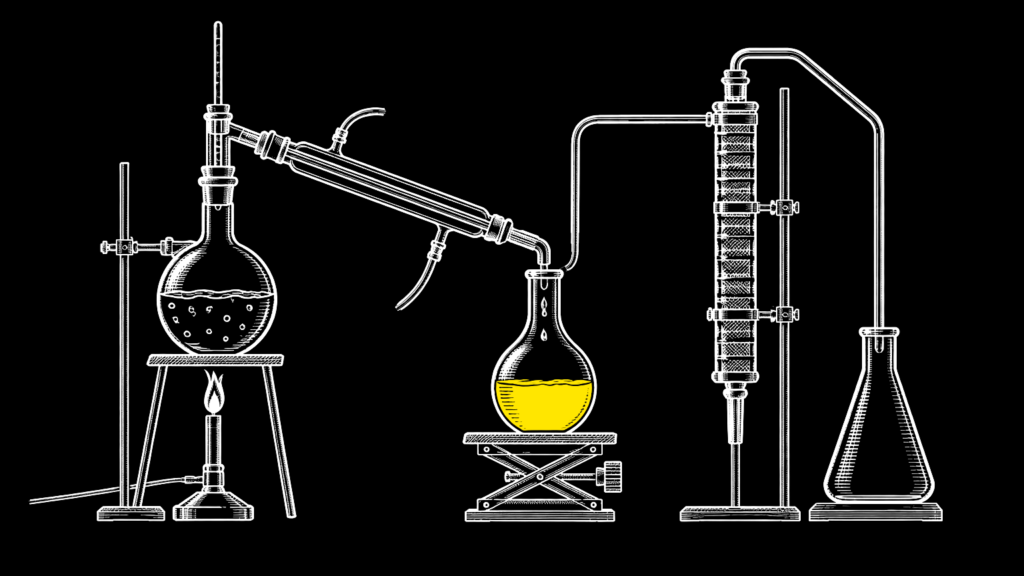
The standard route to those levels, magic state distillation, combines many noisy states into fewer clean ones using operations on logical qubits. Gidney, Noah Shutty, and Cody Jones proposed cultivation as a cheaper alternative in a 2024 paper.
In their scheme, a noisy T state is injected into a small color code and checked repeatedly. Any attempt with a detected error is discarded and restarted, and a state that passes is “grafted” into a larger code. From simulations, they estimated that cultivation could reach errors as low as 2 in a billion at a physical noise level of 1 in 1,000.
What Google ran on Willow
On Willow, the team injected a T state into a distance-3 color code. Without cultivation, the logical error at the T state was 4.4 in 1,000, close to the processor’s physical gate error rates.
With cultivation, the error fell to between 1 and 2 in 10,000, below the error of any of the circuit’s 216 two-qubit gates. The team kept about 8% of attempts in that configuration.
Standard tomography, which reconstructs a quantum state from many repeated measurements, would need about 100 million runs of the experiment to resolve errors that small, the authors wrote. The team instead used cultivation as its own measuring device, a method it calls kickback tomography. The reported error includes errors made during that measurement, so it is an upper bound.
In a second experiment on 54 qubits, the team grafted the cultivated state into a distance-5 code compatible with the surface code. In a memory experiment on the grafted code, the logical error rate was about seven times the simulated rate, a gap the authors said may be due to qubits leaking out of their computational states. They described grafting as a proof of principle and reported no fidelity for the grafted state.
Next steps
Rosenfeld and Gidney wrote that cultivation still has to be demonstrated at a larger scale and that many technical challenges remain. The authors listed real-time T gates, grafting into larger codes, and better decoders among the next steps. They projected that halving the processor’s noise would lower the T-state error bound to about 2 in 100,000 with the same distance-3 code.
The team posted the data behind its figures on Zenodo.