The Dutch cabinet set target dates for central-government organizations to move to post-quantum cryptography (PQC) in a government-wide quantum strategy that it sent to parliament on October 5, 2026. PQC is a family of encryption and digital-signature methods designed to resist attacks by quantum computers. Under the timetable, organizations are to finish migrating high-risk uses of cryptography by the end of 2030 and medium-risk uses by the end of 2035.
The cabinet wrote that it expects a quantum computer able to break today’s public-key cryptography to become available between 2029 and 2035, a moment also known as Q-day. It cited advice from the AIVD, the Dutch General Intelligence and Security Service, to take measures in case such a machine exists as early as around 2030.
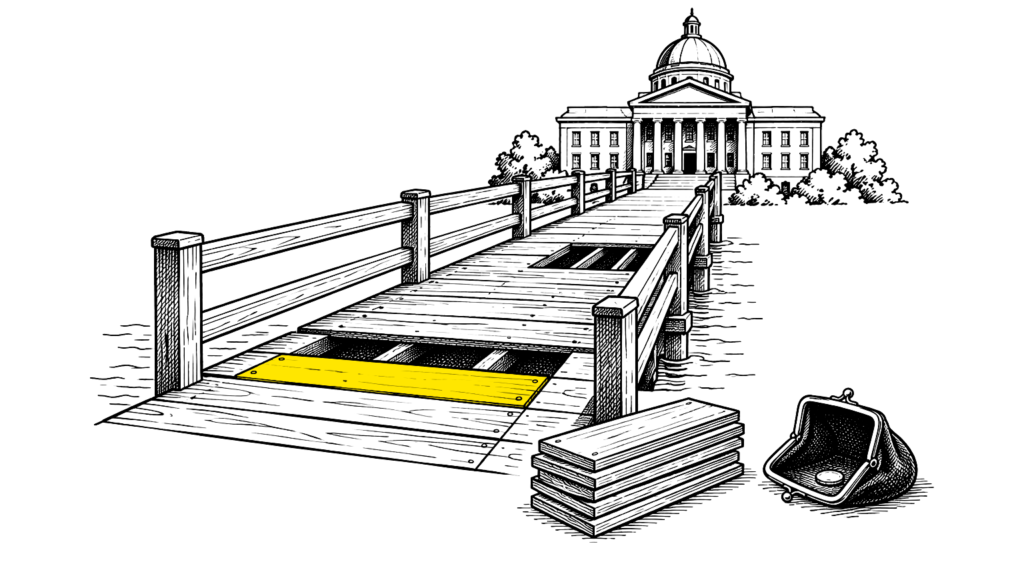
Central-government organizations now have dated targets for the migration but no dedicated new funding for it. The cabinet wrote that ministries should fit the strategy’s actions within their existing budgets in the first instance and that the ambitions will be adjusted if sufficient resources are not found.
In February, the Netherlands Court of Audit reported that 71% of central-government organizations had not yet begun preparing for the threat quantum computers pose to encryption. It wrote at the time that the content and budget of the planned strategy were still unknown.
Milestones for central government
The cabinet aligned the timetable with the EU’s Coordinated Implementation Roadmap for the transition to PQC, published in June 2025. It wrote that central government strives to keep to the schedule and that the dates can be adjusted or brought forward as the threat changes.
By the end of 2026, each organization is due to include quantum risk in its risk management and to adopt its own cryptography policy. By the end of 2027, each is to have taken account of the “harvest now, decrypt later” scenario and mitigated it where needed. In that scenario, an adversary records encrypted data today to decrypt it once a capable quantum computer exists.
Also by the end of 2027, organizations need at least a draft migration plan and practical trials prepared or under way for high- and medium-risk use cases. They also need to estimate the staff and money their migration requires and include that estimate in their budgets. By the end of 2028, they should be able to set quantum-safe requirements in procurement and should have written guidance to steer essential businesses through the migration.
For 2030, the cabinet also set the goal that software and firmware use quantum-safe cryptography by default. Low-risk use cases are to be migrated as far as possible by the end of 2035.
The Ministry of the Interior and Kingdom Relations will coordinate the timetable across government. The government’s Quantumveilige Cryptografie NL program will recalibrate it every year. The cabinet wrote that an organization can depart from the national schedule because of sector rules or international agreements, for example within NATO.
The cabinet wrote that a migration will take a central-government organization at least eight years. It cited a PQC migration handbook that the AIVD, the research organization TNO, and the national mathematics and computer science institute CWI published in 2024.
Organizations under NIS2
The cabinet addressed the milestones to central-government organizations. It wrote that the Cyberbeveiligingswet (Cbw), the Dutch law implementing the EU’s NIS2 cybersecurity directive, has a significant impact on what is expected of government organizations. Under the Cbw, essential and important entities need a specific policy on cryptography.
For essential services in critical sectors, the cabinet wrote that a timely switch to quantum-safe measures is necessary. It wrote that government support for those organizations should align with the Cbw and with the Wwke, the Dutch law on the resilience of critical entities.
The Dutch National Cyber Security Centre said the Cbw took effect on August 15, 2026, and applies to more than 8,000 organizations.
QKD and a police use case
Central government does not currently use quantum key distribution (QKD) for information security, the cabinet wrote. In QKD, two parties build a shared encryption key from quantum states of light, a method designed to reveal eavesdropping.
The cabinet cited a January 2024 position paper in which security agencies from France, Germany, the Netherlands, and Sweden set out considerable objections to using QKD for information security. The U.S. National Security Agency restated its own objections to QKD on October 1.
In the same security chapter as the migration timetable, the cabinet described the ability to break public-key encryption as an opportunity for police, forensic institutes, and intelligence and security services. It compared such decryption to the breaking of the Enigma cipher machine in World War II and to the dismantling of the EncroChat criminal communications network by French and Dutch police.
The cabinet wrote that the impact of such decryption is tied to the speed of the migration to PQC. It also wrote that relatively fast access to a quantum computer is important for these services.
Funding and next steps
Minister of Economic Affairs and Climate Heleen Herbert and State Secretary for Digital Economy and Sovereignty Willemijn Aerdts sent the strategy on behalf of nine ministries, the government said in a statement. In that statement, the government cited €614.9 million already made available to Quantum Delta NL, a National Growth Fund program for quantum technology.
Organizations have until the end of 2026 to meet the first milestones, less than three months after the strategy’s publication. The cabinet will report to parliament on the strategy’s progress every year from 2027.



