The World Economic Forum listed quantum simulation for drug discovery and lattice-based cryptography among 10 emerging technologies in a report it released on June 23, 2026, in Dalian, China, where its Annual Meeting of the New Champions opened that day. The Forum produced the report, Top 10 Emerging Technologies of 2026, with the scientific publisher Frontiers and placed the two quantum-related entries eighth and 10th.
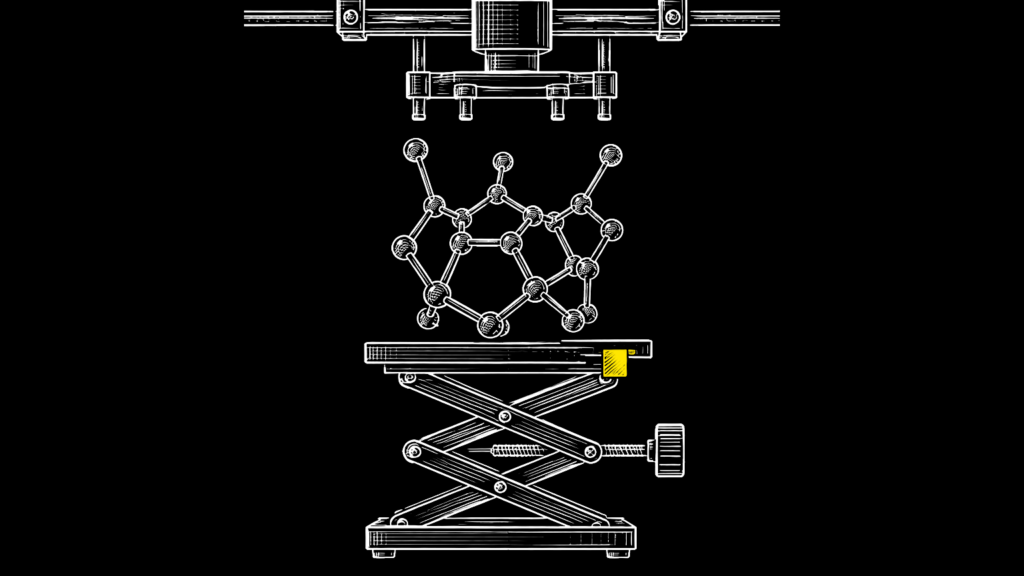
In quantum simulation, researchers use a quantum computer to model how molecules behave. Lattice-based cryptography is a family of encryption and signature methods built on hard mathematical problems involving lattices, grids of points in many dimensions.
The authors wrote that hybrid quantum-classical platforms “remain necessary until fault-tolerant quantum computers become available” for drug discovery, while their policy recommendation for lattice-based cryptography was to “mandate post-quantum migration timelines” across public and private infrastructure. A fault-tolerant quantum computer detects and corrects its own errors during a calculation.
In its release, the Forum described the 10 as innovations “expected to scale within five years” and deliver wide societal benefits. The report is in its 14th edition. The Forum placed everything-to-grid energy first and world models ninth.
Selection method
In the report’s methodology appendix, the Forum wrote that the expert survey used in previous years “was replaced by an AI-based nomination workflow developed by Frontiers.” That workflow uses large language models to generate and validate nominations. The Forum then narrowed the list “from more than 1,200 technologies to roughly 80” using trend data, consultations with its own topic experts, and the removal of technologies featured in earlier editions.
Researchers reviewed the parts of that list in their own fields and recommended dropping some, leaving 20 for the report’s Advisory Council. Council members submitted anonymous assessments through a survey and then voted in two 90-minute meetings in February 2026. Frederick Fenter, chief executive editor of Frontiers, and Jeremy Jurgens, a managing director of the Forum, co-chair the council.
Under the appendix’s scoring rules, impact was scored from 1 to 5, with higher scores for technologies expected to address more areas of systemic challenge. Business traction was a weighted composite of funding at 45%, the density of active companies at 30%, and the pace of recent acceleration relative to historical activity at 25%.
Quantum simulation for drug discovery
In its release, the Forum credited quantum simulation with “unprecedented accuracy” in modeling molecular interactions. “Roughly nine in 10 drug candidates that enter clinical trials fail for a variety of reasons, including design and computing errors,” the authors wrote in the report.
The authors wrote that “what has changed recently is the engineering,” citing improvements in error correction and hybrid architectures with both quantum and classical processors. The quantum drug discovery market “has roughly doubled in value over the past five years,” they wrote.
“Hardware constraints, error mitigation and biological data encoding are still limiting factors,” the authors wrote in the same entry. Error mitigation reduces the effect of errors on a quantum computer’s results without correcting the errors themselves. Regulators “will need shared validation standards before simulation can be accepted as evidence in drug approval decisions,” the authors added, noting that those standards do not yet exist.
As one example, the authors cited Pasqal and Qubit Pharmaceuticals, two French startups using neutral-atom quantum computers for small-molecule discovery with backing from Wellcome Leap, an offshoot of the Wellcome Trust. Neutral-atom machines store quantum bits, or qubits, in individual atoms held in place by laser beams.
Lattice-based cryptography
The authors opened the 10th entry with what, they wrote, security circles call “harvest-now-decrypt-later.” In such an attack, an adversary collects encrypted traffic that cannot be read today and decrypts it once a quantum computer can break the encryption.
The authors credited NIST with giving “the entire industry a vetted blueprint to build against” when it chose lattice-based algorithms “as the primary foundation” of its 2024 post-quantum standards. NIST’s lattice-based standards are ML-KEM, formerly CRYSTALS-Kyber, for key establishment and ML-DSA, formerly CRYSTALS-Dilithium, for digital signatures.
In key establishment, two parties agree on a secret key to encrypt their communications. With a digital signature, a recipient can check who produced a message or a software file and that no one has altered it.
The authors wrote that “deadlines for quantum-safe systems have been set” and cited the European Union’s designation of 2026 as the year public systems must begin quantum-safe migration. The EU’s June 2025 roadmap is a set of recommendations to member states, which asks them to start the transition by the end of 2026 and to move high-risk uses by the end of 2030.
They also cited a National Security Agency requirement for quantum-safe algorithms in all new national security systems by January 2027 and Google’s commitment to finish its own transition by 2029. National security systems include the U.S. government’s intelligence, military command, and classified systems.
The authors discussed fully homomorphic encryption in the same entry. Using that technique, researchers can compute on data without decrypting it.
Beyond mandated timelines, the authors recommended faster adoption of “harmonized post-quantum standards” across global systems and “comprehensive cryptographic asset inventories” to find exposure before migration.