The Cyber Security Agency of Singapore (CSA) published the first version of its Quantum-Safe Migration Handbook on July 16, 2026, with three dated milestones for owners of critical information infrastructure (CII). Under the last of them, CII owners should complete quantum-safe migration across their CII systems by December 31, 2031, so that vulnerable cryptography is no longer used. Quantum-safe cryptography is designed to resist attacks by future quantum computers.
CII refers to computer systems that Singapore designates under its Cybersecurity Act, in sectors that range from energy and water to banking and government. CSA developed the handbook with the Government Technology Agency (GovTech) and the Infocomm Media Development Authority (IMDA). It also released a companion self-assessment, the Quantum Readiness Index.
Singapore’s CII owners have until March 31, 2027, to file quantum-safe migration plans with CSA, and according to the handbook, CSA and its partners are still developing the detailed guidance meant to help them meet the milestones.
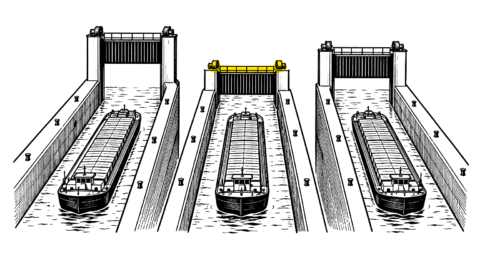
The three milestones
On page 25 of the handbook, CSA presented the dates as “requirements for Critical Information Infrastructure (CII) owners” as part of their migration planning. The first is the submission of each owner’s quantum-safe migration plan to CSA by March 31, 2027.
From January 1, 2028, new CII computers and computer systems with a digital component that owners procure and implement should support quantum-safe algorithms or technologies, be “quantum-safe ready,” or both. CSA did not define “quantum-safe ready” in the handbook. The third is the completion of quantum-safe migration across CII computers and computer systems by December 31, 2031.
“This document is intended for informational purposes only and is not mandatory, prescriptive or exhaustive,” CSA wrote in a disclaimer on page 3. CSA, GovTech, and IMDA wrote that they “are developing detailed guidance” to support CII owners in meeting the milestones.
CSA’s recommendations
On its publication page, CSA described the handbook as practical guidance on where to focus and how to build readiness. CSA organized that guidance into five domains, each with one first step that the handbook labels a “no-regret move.”
For risk assessment, CSA advised starting cryptographic discovery, the work of finding where and how systems use cryptography, on the most critical systems. The other four steps are to name the person accountable for migration decisions, identify replacement algorithms for priority systems, brief senior leadership on the quantum threat, and ask key vendors for their post-quantum roadmaps.
In its algorithm table, CSA listed RSA, Diffie-Hellman, and elliptic-curve cryptography at all key sizes as deprecated, meaning they should be phased out. It also deprecated AES keys shorter than 128 bits and hash functions with outputs shorter than 256 bits.
CSA recommended the post-quantum cryptography (PQC) algorithms ML-KEM, ML-DSA, and SLH-DSA, formerly known as CRYSTALS-Kyber, CRYSTALS-Dilithium, and SPHINCS+, which NIST standardized in August 2024. It also recommended AES-256 and hash functions with outputs of 256 bits or more. CSA limited LMS and XMSS, hash-based signature schemes that require the signer to track which keys have been used, to firmware signing.
CSA named PQC and quantum-safe classical algorithms as its primary recommendations. It suggested quantum key distribution (QKD), a method of sharing encryption keys through quantum states of light, for layered defense or niche cases.
According to CSA, QKD on its own provides neither digital signatures nor authentication and requires an authenticated classical channel. “It is not a replacement for PQC,” CSA wrote.
Quantum Readiness Index
In the index, organizations rate themselves on 10 objectives, two in each of the handbook’s five domains. CSA adapted the index’s four levels, L0 (not started) through L3 (operational), from the Capability Maturity Model Integration framework, now owned by ISACA. Respondents complete the questionnaire at go.gov.sg/qri and receive a PDF report by email with their results and recommended next steps.
Consultation and contributors
CSA released both documents for public consultation in October 2025 and took comments from October 23 to December 31. In the published version, CSA updated sections of the handbook that include the no-regret moves and the algorithm recommendations. For the index, CSA refined the objectives and added a no-regret objective to each domain.
CSA, GovTech, and IMDA developed the handbook with Accenture, Amazon Web Services, Cisco, Deloitte & Touche, IBM, PQStation, and the Association of Information Security Professionals. CSA developed the index in consultation with A*STAR, Accenture, Deloitte, evolutionQ, SGTech, SpeQtral, and the World Economic Forum.
Update, November 12, 2026: On October 14, CSA said that it had issued quantum-safe migration guidance with key milestones to CII owners in June 2026 and that CII migration should be completed by 2031. In an advisory the same day, CSA asked other organizations to have a migration plan in place by the end of 2027. On November 6, the Monetary Authority of Singapore proposed that financial-sector CII owners complete migration of their CII systems by December 31, 2029, in a consultation paper it said is not intended to impose legally binding obligations.